
Miles Card or Cashback Card? Use a Break-Even Habit, Not a Debate
Miles and cashback answer different needs. Cashback is liquid and easy to verify. Miles can be more useful for a specific travel goal, but only when you can earn, transfer and redeem them without waste. The right choice may vary by spending category.
Define a real redemption goal
Write down the trip, likely dates, passengers and cabin. If no plausible redemption exists in the next planning cycle, discount the theoretical value of miles. Flexible rewards can reduce that risk, but transfer options and terms should be checked before relying on them.
Find your break-even point
For each card, estimate the after-fee cashback or the conservative value of usable miles. Include caps, minimum spend, rounding, transfer charges, expiry and the effort of managing another account. Never use a premium-cabin cash fare you would not pay as the value of an award.
Use a two-layer strategy
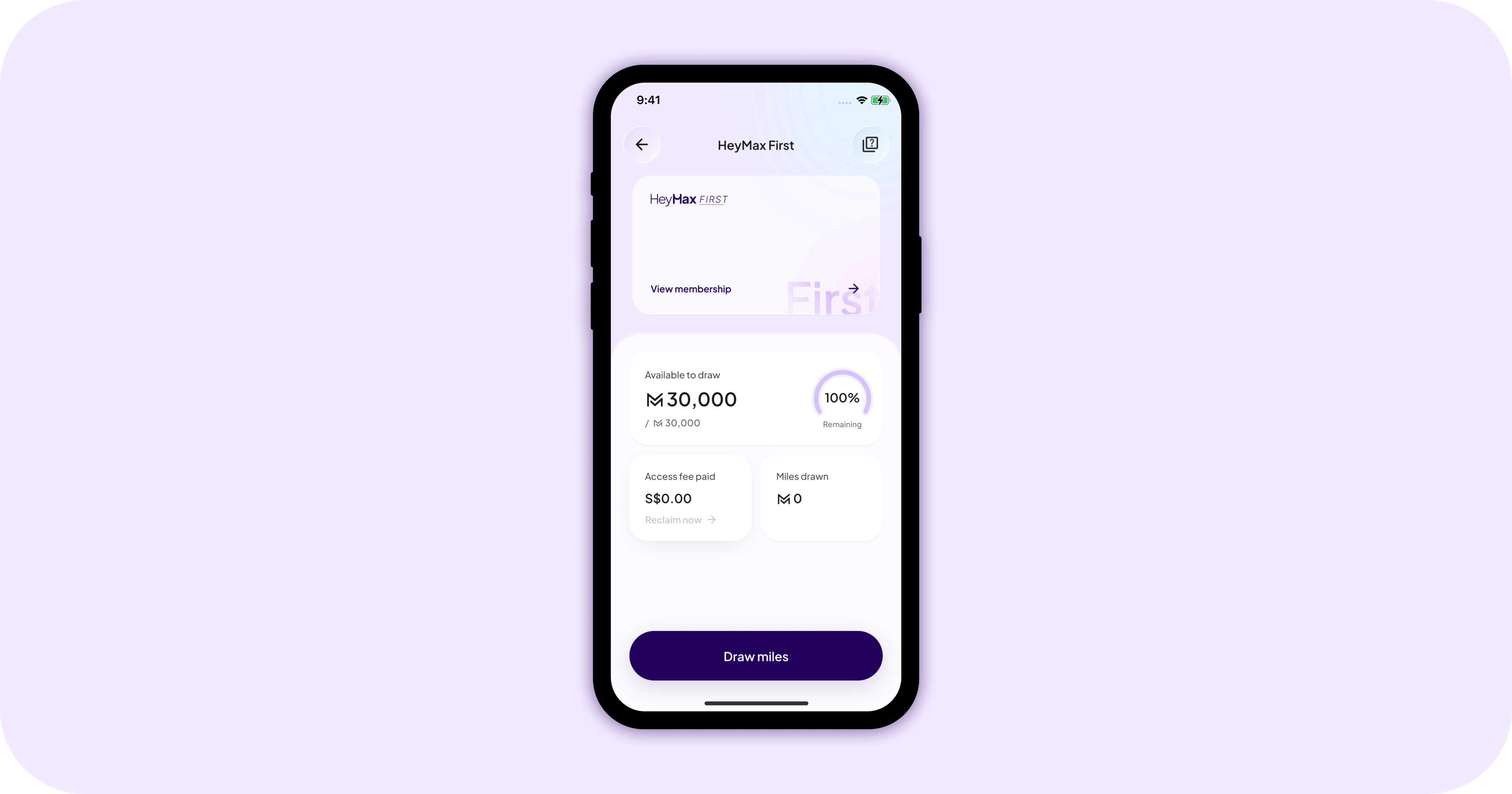
A simple setup can use cashback for categories where the reward is clearer and miles for spending aligned with the travel goal. Before an eligible online or voucher purchase, check HeyMax; earning Max Miles may add a flexible travel layer regardless of which payment card wins the transaction-level comparison.
Review quarterly. If points are fragmented, caps are repeatedly missed or balances do not support a real booking, simplify. The best rewards plan is the one that survives normal life.
FAQ
Are miles always better for business class? No. Availability, taxes, flexibility and your willingness to pay all matter.
Can I mix cashback and miles cards? Yes. Give each card a clear job and avoid overlap that makes caps harder to manage.
Does using HeyMax require a miles card? No. Check the current eligible route and use the payment method that suits the purchase.
What if the official sources disagree? Prefer the source governing the exact account, market and transaction. Note effective dates and seek provider confirmation before committing money or irreversible points.
How conservative should reward value be? Use the value of an achievable, intended use after fees. If no credible use exists, assign little or no decision value rather than importing a headline valuation.
How long should records be kept? Keep terms, confirmations and receipts through fulfilment, reward posting and any refund, dispute or claim period. Follow longer legal or provider requirements where applicable.
When does simplicity win? When two options are close, choose the path with clearer support, fewer irreversible steps and lower monitoring burden. A strategy that is repeatedly executed correctly can outperform a fragile theoretical maximum.
Internal links: Miles valuation guide via Resources; three-score redemption guide; How Max Miles are funded.
Two household profiles
Consider a traveller saving for two premium-cabin seats with flexible dates. They can identify a credible programme, monitor availability and accumulate flexible rewards without paying interest. Miles may have a clear job. A second household values simplicity, travels during fixed school holidays and usually buys economical cash fares. Cashback may be more useful because it is certain and can offset any travel purchase.
Neither profile proves one reward type is superior. The framework asks whether the reward matches an achievable use, how much administration it requires and what value disappears through fees, caps or unused balances.
Build the break-even calculation
For cashback, use the amount expected after minimum-spend and cap rules. For miles, multiply expected usable miles by a conservative personal value, then subtract annual costs, transfer fees and the cost of spend redirected from a better card. If the miles require a behaviour the household will not sustain, remove that benefit.
| Factor | Cashback | Miles |
|---|---|---|
| Value certainty | Usually visible on statement | Depends on redemption |
| Goal required | Optional | Strongly helpful |
| Availability risk | Low | Can be material |
| Expiry/transfer rules | Product-specific | Product and programme-specific |
| Effort | Often lower | Search and transfer work |
| HeyMax compatibility | Check eligible route | Check eligible route |
The table is descriptive, not a ranking. Weight each row according to the household's real plans.
When a hybrid setup works
Assign one card to a small number of high-confidence miles categories and another to general cashback or uncategorised spend. Put each card's role in a note on the phone. If two cards compete for the same transaction, choose one default and stop recalculating at the counter.
HeyMax can add a separate Max Miles layer to eligible purchases. Search the merchant before checkout, follow current tracking instructions, and then pay with the card that wins the transaction decision. This can preserve travel progress even when a cashback card is the more sensible payment choice.
Quarterly review questions
Ask: Did rewards post as expected? Did caps create spillover? Are balances large enough for a plausible use? Did annual fees or transfer charges change? Did the household carry a balance? If interest was paid, simplify immediately; reward optimisation must never compete with repayment.
Also review programme changes neutrally. An award-pricing or transfer-ratio update may affect a particular route without making every redemption unattractive. Recalculate the intended trip rather than reacting to a headline.
Expanded FAQ
Can cashback fund a miles trip? Yes. Cashback can offset fares, taxes, positioning flights or hotels. It need not be labelled “travel rewards” to support travel.
What if I cannot estimate a mile's value? Use a low conservative value or treat miles as having no decision value until a plausible redemption is identified.
How many cards should a hybrid setup use? Use the fewest that clearly improve outcomes without missed payments, unused benefits or tracking fatigue.