
Where Can You Transfer Credit Card Points? Build a Destination-First Shortlist
You can transfer credit card points only to the airline and hotel loyalty programmes supported by your bank at that time. A long partner list can look impressive, but length is not the same as usefulness. The practical question is which available programme can book the trip you want, with acceptable points and cash costs, on dates you can use.
Partner lists, conversion ratios, minimum blocks, fees and transfer times can change. Use published comparisons to understand the landscape, then verify the final decision in the bank’s live rewards portal and the destination programme. Keep points flexible until you have a clear reason to move them.
Start with the trip rather than the points balance
Define an actual travel job: origin, destination, acceptable nearby airports, date range, number of travellers and cabin. Include your tolerance for connections and whether all travellers must fly together. A vague goal such as “use my points for Japan someday” is too broad to distinguish a useful partner from a merely familiar one.
Next, identify the airlines that can operate a practical itinerary. Then identify loyalty programmes that may book those airlines, including an airline’s own programme and relevant alliance or bilateral partners. This route-first order prevents you from transferring to a famous programme that has no usable inventory or poor terms for your journey.
For a primer on flexible currencies, read how to use transferable points currencies. The shortlist process here begins after you understand that a bank point and an airline mile are different currencies.
Map airlines and programmes without assuming access
An airline operating the flight does not mean every partner can book every seat. Airlines decide which award inventory they release to their own members and to partners. Partnerships can also differ by route, flight number or booking class. Treat an alliance diagram as a map of possibilities, not a guarantee.
Create a first-pass route map with the operating airline, nonstop or connecting option, and programmes you can actually fund from your bank. Remove programmes your bank does not support unless you have another legitimate balance source. This keeps research proportional to the decision.
When a route uses several segments, note who operates each one. A programme may display the long-haul seat but not a domestic connection, or price segments separately. Search the pieces as well as the full itinerary before declaring a programme viable.
Search live award availability before transferring
Log in to the programme that would issue the ticket and search for the exact number of travellers. Record the date, flight number, operating airline, cabin on every segment, mileage price and cash component. If an external search tool found the seat, repeat the search with the ticketing programme.
Availability seen in one programme is not proof that another partner can book it. Partner systems can lag or show inventory that fails at checkout. When the transfer is material, repeat the search close to the decision and consider whether the programme offers an official hold. Do not assume a hold exists.
Award space changes while you search. Build flexibility into dates, airports or routing, and identify at least one backup. HeyMax’s award-seat search workflow provides a repeatable way to move from route definition to verification.
Compare the whole conversion, not the advertised ratio
For each viable programme, calculate how many bank points must leave your account. Apply the current conversion ratio and minimum block, then note unusable remainder. Add any transfer fee and the award’s taxes or surcharges. A lower mileage price can still require more bank points or more cash.
Time is part of the comparison. Record the sender’s current transfer estimate, whether first-time account linking adds verification and whether the award may disappear while points move. A slower route can be acceptable with flexible dates and several seats; it may be unsuitable for one fragile seat on a fixed trip.
Finally, examine life after transfer. Note expiry, change and cancellation terms, household or nominee restrictions and a backup use if the preferred trip disappears. Most transfers are effectively one-way, so the quality of the fallback matters.
Use a destination-first shortlist worksheet
| Column | What to enter | Decision value |
|---|---|---|
| Programme | Exact airline or hotel loyalty currency | Identifies where points will become locked |
| Bookable route | Flight, cabin, date and traveller count | Replaces theoretical access with a real use |
| Total requirement | Miles plus taxes and surcharges | Shows the complete award cost |
| Bank requirement | Points, blocks and fee | Makes conversion options comparable |
| Transfer risk | Timing, availability and reversibility | Measures the chance of being stranded |
| Backup | Second itinerary or later use | Reduces the damage if the first seat disappears |
Eliminate any row that fails a must-have requirement, such as the number of seats or maximum cash cost. Rank the remaining options by total cost, flexibility and confidence. Do not give an option extra credit merely because its programme is popular.
Keep a timestamp on the worksheet. It is a decision snapshot, not a permanent partner table. Recheck every live figure before submitting a transfer.
Add a confidence note beside every row. “Confirmed in the ticketing programme” is stronger than “seen in a third-party tool,” while “estimated from a chart” is not the same as live availability. This small distinction helps two travellers reviewing the same worksheet understand which facts are solid and which still need validation. It also prevents an old search result from becoming an accidental promise after prices or inventory change.
How Max Miles fit into the shortlist
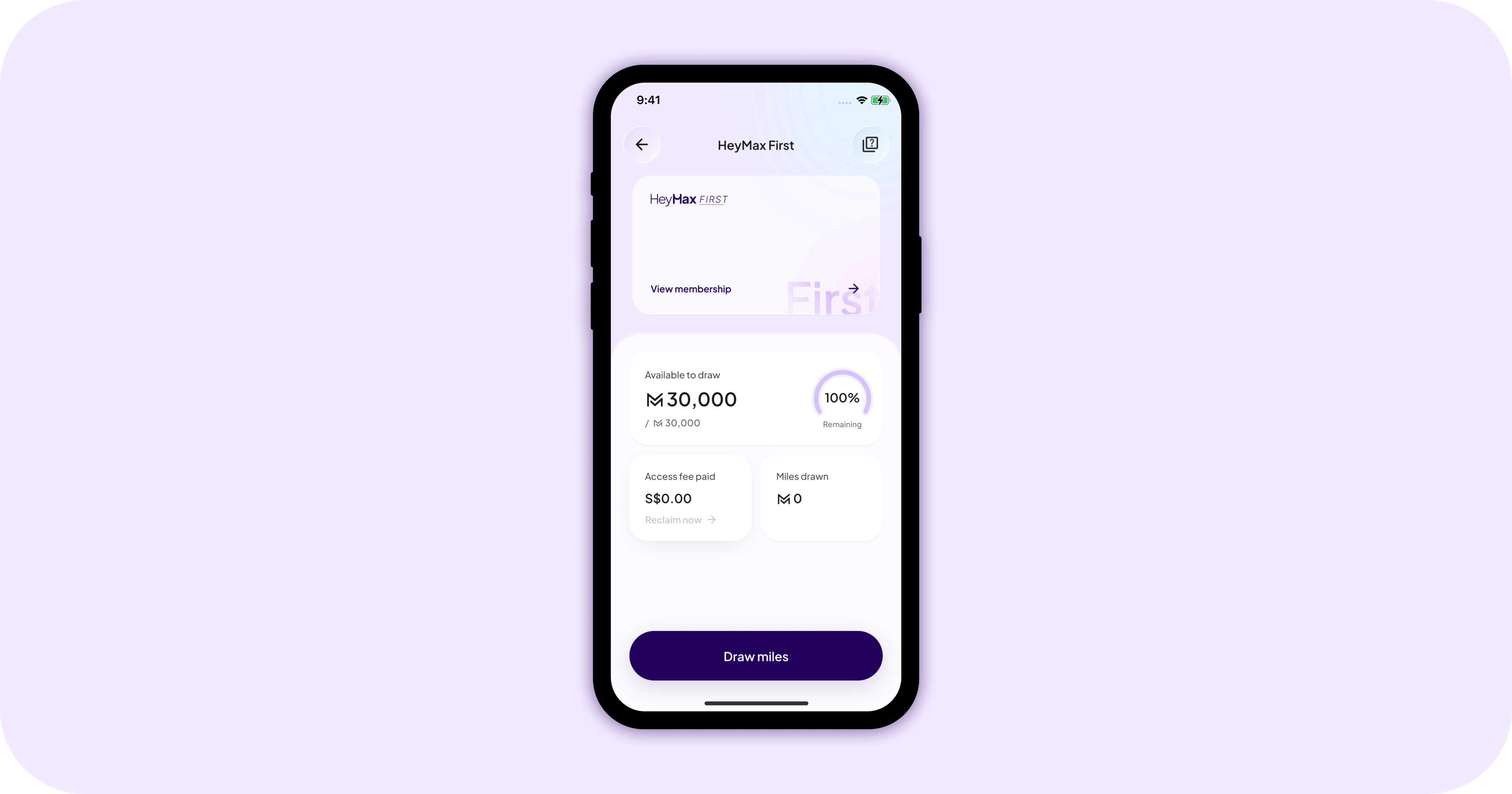
Max Miles provide another flexible rewards pool, but they should not be treated as identical to bank points. Check the current transfer and travel-redemption options shown by HeyMax when you are ready to act. Partners, ratios, minimums and timing must be verified in the relevant live flow.
Flexibility is valuable because travel plans and award availability change. If both bank points and Max Miles can support a journey, compare what each route requires and what options remain afterwards. Moving the less flexible or more time-sensitive currency is not automatically right; the complete booking plan should decide.
For a concrete airline question, see whether Max Miles can be transferred to Japan Airlines. The important lesson is to distinguish direct transfers from partner-booking possibilities and to verify the current route before acting.
Worked example: Singapore to a destination with several airline options
Suppose a traveller wants two seats during a school-holiday window. The route map identifies a nonstop airline and two connecting alternatives. The bank supports several programmes associated with those carriers. Instead of transferring to the familiar nonstop programme immediately, the traveller searches all three routes for two seats.
The nonstop programme shows one seat, so it fails the traveller-count requirement. A partner displays two seats but adds a connection and higher cash charges. A third option has no seats on the first date but works two days later. The shortlist makes the trade-off explicit: date flexibility versus connection time and cash cost.
The traveller then calculates bank points required, not just airline miles, and records a backup use in the chosen programme. Only after rechecking the seats and account details does a transfer become reasonable. No current rate is needed for the method to work.
Common shortlist mistakes
- Copying a partner matrix without a trip: access is useful only when it supports a real route.
- Searching for one traveller: repeat the search for the full party before transferring.
- Comparing miles instead of bank points: conversion ratios and blocks can reverse the result.
- Ignoring cash charges: taxes and surcharges belong in the total cost.
- Treating external availability as final: confirm with the programme that will ticket the award.
- Transferring for a bonus alone: extra miles do not repair poor availability or an unusable programme.
- Having no fallback: record another acceptable use before making a one-way move.
Frequently asked questions
Can I transfer points from one bank to any airline?
No. Each bank supports a defined set of loyalty programmes under its current rules. Even when two banks share a partner, conversion ratios, minimum blocks, fees and timing may differ. Verify in the sending bank’s portal.
Should I transfer during a bonus?
Only when the destination programme supports a genuine plan and you accept its expiry and availability risk. A bonus can improve an already sound transfer; it cannot make an unbookable itinerary useful. Confirm that bonus terms and posting timing fit the booking.
Can airline miles be transferred back to the bank?
Usually not. Treat the move as irreversible unless current terms explicitly say otherwise. That is why you should identify a bookable use and a credible backup before submitting the transfer.
Should I choose the programme with the lowest award price?
Not automatically. Compare the bank points required, cash component, seat availability, transfer speed and change rules. A slightly higher mileage price can be the better option when it is bookable and flexible for your trip.
The HeyMax takeaway
A transfer-partner list is raw material, not a recommendation. Start with a destination and traveller count, verify seats in the programme that will issue the ticket, calculate the complete conversion and record a backup. Check live HeyMax options alongside bank routes, and preserve flexibility until the evidence supports a specific booking.